




Can You Iron Football Jerseys? Look At The Label First, But Also Avoid The Number And Team Logo
Some football jerseys can be ironed, but not every one of them can. If the care label allows low-temperature ironing, proceed as instructed above; if it says no ironing, do not use an iron. Numbers, team logos, and other patterns need to be viewed separately. Just because clothes can be ironed doesn’t mean these places can be ironed as well.
First, find the wrinkle: is it the fabric of the garment, or the number itself? Creases on fabrics can be treated at low temperatures, while wrinkling or warping of numbers involves the pattern material and the bonding state, and cannot be solved by the same method.
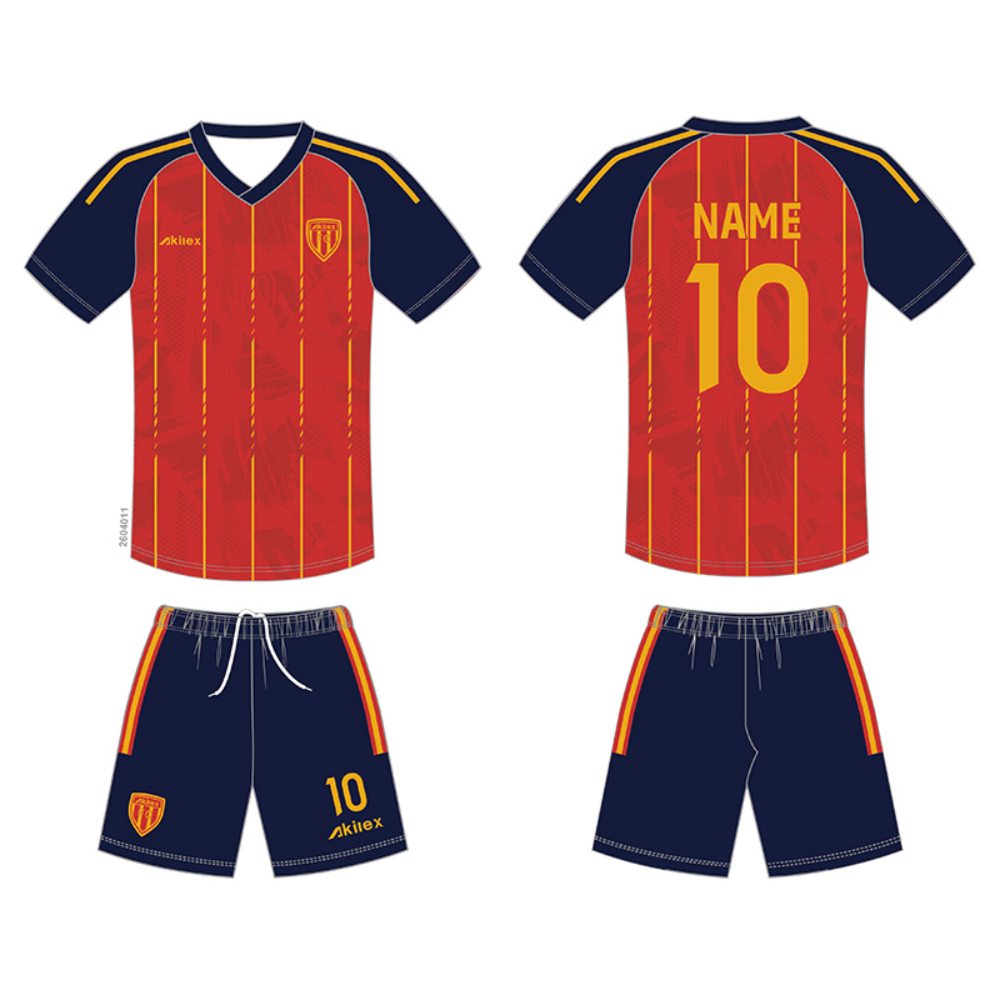
The Label Says It Can’t Be Ironed, So Don’t Use An Iron
You can usually find the ironing requirements by looking at the care label on the inside of the jersey. You can also check the official care instructions for this specific style.
GINETEX’s care labeling guidelines state that ironing temperature should be selected according to the care label and should not be determined solely based on fiber composition. An iron with a fork on the design indicates that ironing is prohibited, and using an iron may cause irreversible changes.
Therefore, even if you know that the jersey is made of polyester fiber, you cannot directly assume that it can be ironed at low temperatures. It also depends on the requirements on the ready-to-wear clothes.
The label allows low-temperature ironing, and you can continue to check if there are patterns and steam restrictions; if the label prohibits it, you don’t need an iron, and the pad and flip-up cannot change this requirement. If the label has been cut off, the writing is blurry, or the instructions you find are contradictory, do not heat it yet. Find the care instructions for the same product, or verify with the brand or custom processor before processing.
“Low temperature ”do not set based on your feeling either. The label gives an upper temperature limit, which cannot be exceeded; if you cannot understand the diagram, find out the meaning first and do not try to iron it with a cotton or linen setting.
After Turning It Over, You Can’t Iron The Number Directly
Some jerseys allow low-temperature ironing, but at the same time require avoiding patterns.
For example, adidas’ Squadra 25 football jersey care instructions state that ironing can be done at low temperatures, require turning the jersey inside out, and prohibit ironing the design. This is a care requirement for this jersey and cannot be used directly on other jerseys.
If the pleats are only on undecorated fabric, they can be treated under the conditions permitted by the label. If the wrinkles are the number, team logo, or the wrinkles just go through the pattern, you can’t iron that piece together.
The same applies to flipping over. Even if you iron the iron from the back of the number, the heat will still be transferred to the number. There is only one more layer of fabric, so it cannot be judged that the pattern can be heated.
Later, if the jersey with the name or number is printed, the care requirements given by the processor must also be considered. The original jersey label may not cover materials added later; avoid the printed area before receiving the corresponding instructions.
Once You Are Sure You Can Iron, Try A Small Piece First
Only jerseys that allow ironing and where there are no patterns or decorations prohibiting heat exposure are suitable for the following method.
Set the temperature according to the care instructions first, and then see if the steam can be used. Allowing ironing does not mean allowing the use of steam; if there is a clear requirement that there is no steam, turn off the steam, and if the explanation is unclear, it is recommended not to use it yet.
Turn the jersey over as required and lay the single layer of fabric to be processed flat. In addition to avoiding the numbers and logos in front of you, also check if there is a pattern pressing down on the other side. If any laying of this area will heat up the pattern, then don’t iron it yet.
When a doily is needed, use a clean, flat ironed spacer. GINETEX recommends using a spacer or ironing inside out on clothing that is prone to bright marks or pressure-sensitive, provided that the clothing itself is ironable.
For the first treatment, it is recommended to choose a small, inconspicuous place without decoration, try ironing briefly, and then look at it after it cools down. Stop if it becomes shiny, discolored, stiff, or deformed. No changes were found during the trial ironing, and it can only be used as a reference for continuing to work on similar fabric areas. It cannot be stated that the number and team logo can also be ironed in this way.
The wrinkle can be completed once it is improved. If there is no obvious effect at low temperatures, stop first and look for other ways. Do not heat up on your own, increase the pressure, or let the iron stop at the same point for a long time.
These procedures cannot guarantee that the jersey will not be damaged; it still depends on its own care requirements. With a large area covered by the pattern, there may not be many places to avoid ironing the pattern.
Jersey That Cannot Be Ironed, Unfold And Organize First
If there are slight wrinkles left by packaging or folding, you can first unfold the jersey, gently adjust the body, and hang it for a period of time. This method does not require heating, but it does not guarantee that deep creases can be removed.
If the jerseys need washing, wash and dry them according to the label, and arrange the shape of the jerseys in time after taking them out to avoid further stacking. Do not use high-temperature drying to remove wrinkles.
Don’t just use a garment iron as a replacement for an iron. It also brings heat and moisture, and the fact that the steam head does not press down on the clothes does not prove that the fabric and pattern are suitable for this treatment. If the care instructions are not clearly written, it is recommended to confirm with the brand or processor first.
The Number Is Warped, Don’t Press It Back Yourself Yet
Wrinkling, curled edges, or partial detachment of the number is no longer just a problem of wrinkle removal.
“Press the spacer cloth again” cannot be used as a general repair method. It is unclear what material the number is, how it was originally bonded, or whether it is currently damaged, so it is impossible to give the appropriate reheating temperature and time.
First, take a picture of the partial condition of the number and the jersey care label, and hand it over to the brand or the original custom processor to determine whether it can be repaired. For wrinkles on ordinary fabrics, go back to the label to find the answer: ironing is allowed and can avoid the pattern, then treat at low temperature; ironing is prohibited or the instructions are unclear, unfold and arrange first, and do not heat for the time being.