




How To Crop Top Football Jersey
Change the jersey to a curp to determine the length of the finished product to be worn on the body, then leave a folding margin down and then cut it. The clothes would be shorter than expected if they were cut directly along the desired lower position and later folded.
The solution to be addressed by “how to top football jersey” is to convert existing football or American football uniforms into short shirts. The focus of the operation is on coating, number location and substructure. The following approach is oriented towards the day-to-day dressing; the dress requirements of the events to which they belong should be checked first for the jerseys intended for continued use in the formal game.
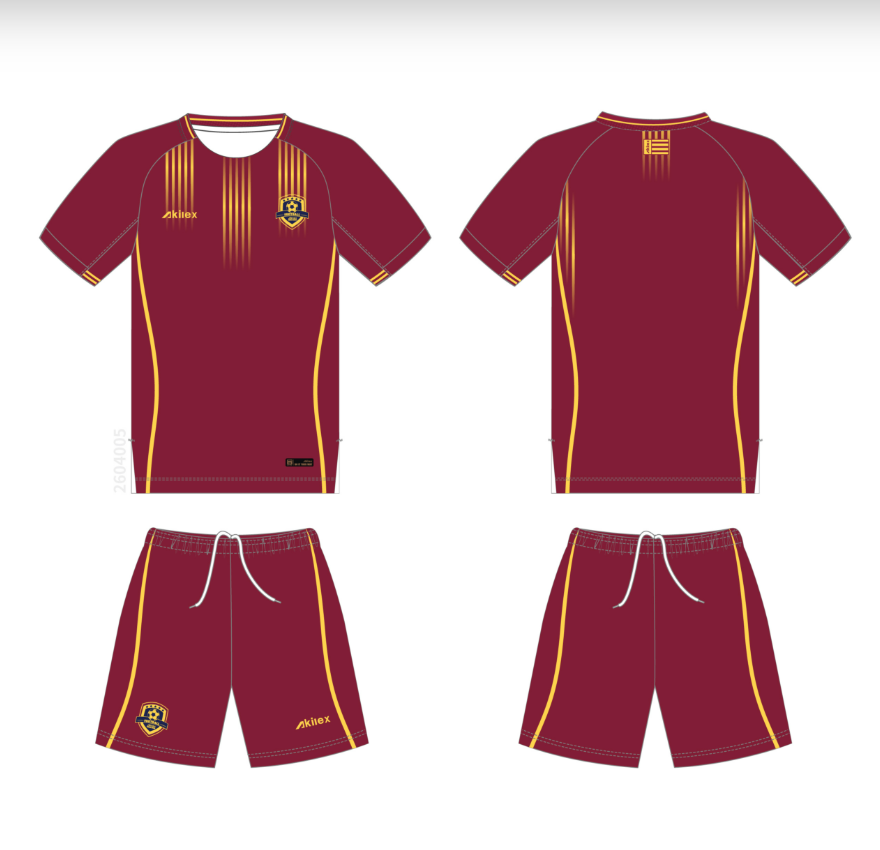
Let’s Fold It In, See How Short You Need It
Don’t cut it.
Put on paired pants, fold the ballie down to the target position, and observe the front, side and back. There is no uniform length of shorts: they fall on top of their waist, they are covered or they are covered in a single line, each requiring a different line of finished products.
It’s not enough to stand. Raise your hands, sit down, stretch your arms forward, and check how much you move at the table. The back of the chest will stand up and be laid for the same length and length, not necessarily at the same height. The markings should be modified with a trial penetrating effect and not only one fixed distance upward from the original bottom.
If the short-term effect is only occasionally desired, it may be used to pre-stamp and plug it into the inside, to check whether it slips out and the waist accumulates. It’s appropriate for the length of the trial, and it helps you to judge whether it is worth a permanent reduction.
Before Cutting, Check The Numbers, The Eyes And The Side Open
Look at the back and back of the jersey and confirm which parts of the planned new sub-position will pass.
The number’s complete. It doesn’t mean it’s gonna work. Even if the scissors do not touch the number, the fabric that turns inward may still hold the thicker print area, making it difficult for the new to fall naturally. The folds should actually be folded out and looked both the opposite and the opposite instead of just checking the cropping lines.
The cut-off performance of knitting is different. According to the University of Kentucky ‘ s sewing materials, single-sided fabrics are common on sides and some other knitting structures are more stable. Thus, “the jerseys are knitted and not processed” cannot be a generic judgement.
If the target length is to be cut off, the choice must be made: to retain longer clothes, to accept a cut-off, or to ask the tailor to assess more complex modifications. The general retrenchment does not at the same time guarantee arbitrary length and integrity.
Distinguishing Finished Lines And Shearing Lines, Avoiding One Cut
Prepare fabric scissors, soft feet, straight feet, removeable fabric marking tools and locator kits. Test whether the markings can be removed in a hidden place before drawing to a visible position.
The following order is suggested:
Marks where the finished product is. On the basis of the result of the trials, identify the lower drop points on the front, middle and back sides. When the jerseys are removed, the markings are laid down and checked for expected lower shapes.
The shoulder, clothing and side stitches are streamlined and the fabric is kept naturally relaxed. Don’t stretch one layer for alignment.
Add folds below the finished line and draw the cropping line. The two lines play a different role: one decides where to go, the other decides where to go.
Collapse inwardly before cropping, checking numbers, left and right height, and wear effects. Check it out and cut it.
For example, it is planned to use a two-centimetre inverted single folding, which should be painted at 2 centimetres below the finished line. This is only an example of a residual calculation, not a uniform specification for all jerseys. The actual edge width shall be determined by combining the thickness of the fabric, the radians and the results of the trials.
Crops the entire shirt to the desktop support. Wrestling outside the table, or holding hands tight, affects the shape of the cropping. The Sewing & Craft Services Institute also recommended that knitting be cut flat to avoid deformation by scrambling weight.
If you encounter an apparent cylindrical ligation, you can trim it and check the marks separately. Don’t force a clipping in exchange for a clean face.
We Need To Keep The Stretches We Need To Wear
Cutting is just half done.
The new set must be smooth and bear the stretch of the piercing. For needles that need to be stretched down, flexible threads, narrow-tooth lines, suitable double-plug edges, or bandaged processing may be selected according to the equipment. Specific needle types, threads and tension should be determined on the residual sheet of the same material; there are no fixed settings applicable to all jerseys.
The Newsing & Craft Alliance guide makes it clear that the stitching and downswing of knitting clothes require the retention of stretching capacity and lists treatments such as double needles, elastic dark stitches and bandages.
We’re going to use the leftovers to simulate real folds. If the new substrates pass through a web eye or a side stitch, the sample should also contain as many layers and structures as possible. Sew it down and check three results:
(c) The emergence of needles or needle holes: the suspension of formal stitching, the re-examination of needle type, the state of needles and the adaptation of fabric.
When the fabric is flat, it is wave-shaped, indicating that the test stitches have not met the requirements; it should be checked if the delivery material, the pressure on the foot and the stitches were stretched.
The current line combination is not suitable for this sub-set and needs to be tested again.
When officially stitched, the clothes were secured, the machine delivered the material and the hand was only directed. In particular, through the thick side stitches, do not pull the jersey forward.
When ironing is required, the laundromat label is used. Temperature cannot be determined on the basis of “polymer fibres” alone; patterns, adhesives and other aids may also limit ironing.
Can You Wear It Without Stitching?
It can be selected as a specific form, but should be preceded by residual performance.
Lightly pull, rubbing, and observing whether the edges are clearly curled up, dispersed or forming easily connected wires. If the naked side is not stable and flat, it is also difficult to guarantee the appearance of the naked and cleaned. There is a need for a neat and re-dressable subtraction, with priority given to the suture treatment suitable for the fabric.
The seamless ironing of tape is not directly considered a universal alternative. Prior to use, it needs to be confirmed that it applies to this piece of fabric, that it can withstand the stretch required for the downsliding, and that the adhesive temperature meets the requirements of a blouse wash. Where this information is lacking, the residual sheet is tested.
It’s Still Too Broad. Should We Tighten Or Shrink?
Shorter is the main change. It does not automatically shrink bras, shoulders or sleeves.
If the shortness of the jersey is still loose, a separate assessment of the cut-off or other layout adjustments is required. When you narrow down, you have to check whether the collage position has been changed and you can’t just sew one side into the other.
The stretching has addressed the lack of local space to replace shorter clothes. Shortfalls rely on high-temperature shrinkage and control over final size is lacking. The United States National Standards Bureau’s fibre consumption guide states that polyester fibres are generally not significantly constricted or stretched in normal use; this general nature cannot be converted to a fraction of the water in a piece of jersey.
If you have a clear idea of which line you want, it is easier to control the result than to try to “sweat” the whole dress by measuring the fold of the suitable fabric.
Once It’s Finished, Wear It Again
When you look down, let the jersey fall, then lift your hand, sit down and wear it. It was confirmed that the length was consistent with expectations, that the side stitches had not been significantly reversed, that the lower strangulation had not strangled the body and that the number had not been folded around.
They are then washed and dryed by a washing label, and review whether the edges are curled up, the stitches are loose, and the junction is deformed.
If the new set must pass through a thick number, a complex side open, or if the rest of the sew is still needle-jumping, broken, the jersey is handed over to the tailor along with the marked finished position. The length and pattern that must be retained should be determined before the modification requirement could be made clear.